Speed Cards
Speed Cards opens this site because it answers the first question of any session: how long is one round. Every game here completes a full round inside five minutes, with a clean ending and no screen…
50 · short rounds, clear turns Critter Mahjong Solitaire
 Number Domination
 cute Animals Memory
 ReNumber Kids
 The Hidden Booty
 INCOWORD
 Dandys World Memory
 4 Colors Card Mania
 World Cup 2026 Memory Quest
 TastyFarm
 Math Squares
 Spider Match
 Makeup Match Memory Beauty
 Animal Pair Card Match
 Toca Life Memory Card Match
 Castle Cards
 Big Smash
 double klondike solitaire Card
 Cute Kitty Memory Challenge
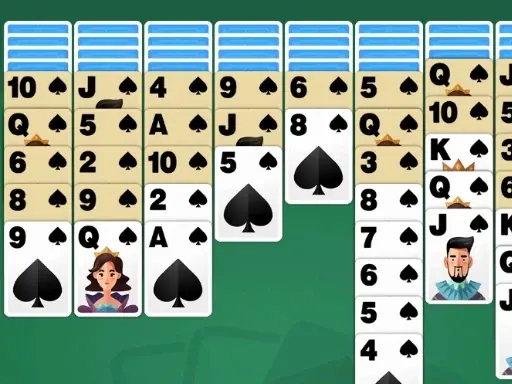 Classic Solitaire Master
 Crescent Solitaire
 Sprunki Incredibox Memory
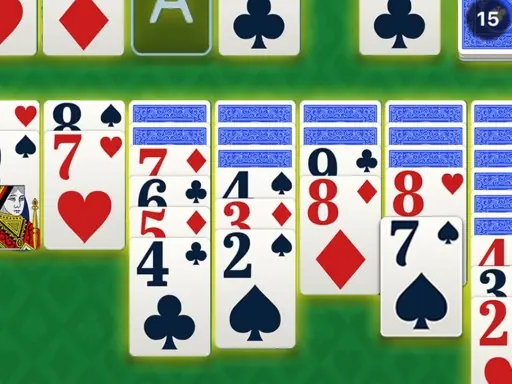 Nova Solitaire
 Match Pairs Memory Card
How Speed Cards plays in the browser
Every game here completes a full round inside five minutes, with a clean ending and no screen begging you into the next one. We pick decks that deal fast on weak machines and skip titles that need extra font packs or 3D effects, because a short round is only worth it when it starts inside your breath rather than after a progress bar. Working people use this shelf as a floor between floors: one hand before a meeting, one after, and never the whole afternoon.
All 50 games in this section run inside the tab: no install, no account, no download. Tap a title and the game opens on this same page.
- One tab, one game. Close the tab and the session is over.
- Finger controls or keyboard, depending on the title.
- Scores stay in this browser, so there is no account to maintain.
Three titles to open first
Picked from the 50 titles in this section.
- Critter Mahjong SolitaireCritter Mahjong Solitaire is a browser Speed Cards game you can…
- Number DominationOpen Number Domination and you are already playing — no login…
- cute Animals Memorycute Animals Memory is one of the easier Speed Cards games to get…
An older phone is enough
If the screen feels cramped, rotate to landscape or hit the fullscreen button inside the game. Most titles rearrange their controls to the screen size.
Five concepts in browser card games
Browser cards use few concepts, but each one changes how you count a round.
- Forced play
- The only legal move; spotting it saves time weighing alternatives.
- Dead card
- A card that cannot be played until the end; keep it to block space, not to win.
- Scoring lane
- The direction you can score in; most rounds have only one or two.
- Hand size
- Cards in hand; below three your options narrow fast.
- Large round
- A round needing three moves of planning; not for short breaks.
- Deal round
- A redeal during a round; the number of deals changes strategy.
- Face-down card
- A card you cannot see; read it through the opponent's moves.
- Minimum score
- Points needed to win; below it, aim for a draw.
- Deal round
- A redeal during a round; the number of deals changes strategy.
- Face-down card
- A card you cannot see; read it through the opponent's moves.
- Minimum score
- Points needed to win; below it, aim for a draw.
- Deal round
- A redeal during a round; the number of deals changes strategy.
- Face-down card
- A card you cannot see; read it through the opponent's moves.
- Minimum score
- Points needed to win; below it, aim for a draw.
In Speed Cards, players who spot the forced play finish rounds about a third faster.
Speed variants and the one rule that changes each one
Every speed game is the same two piles with one rule altered. Knowing which rule changes is what lets you sit down at an unfamiliar table in Speed Cards.
| Variant | Decks | Hands | Win condition | Tempo |
|---|---|---|---|---|
| Speed | 1 | 5 each, 5 in each stock | Empty both hands first | Fast, no thinking between plays |
| Spit | 1 | 5 each, shared piles | Empty your hand onto either pile | Very fast, both players on the same pile |
| Nerts | 1 per player | 13 in a pile, 4 in hand | Empty your 13-card pile | Fast, four piles open at once |
| California Speed | 1 | 5 each, 5 in each stock | Empty both hands with no turns | Fast and chaotic, hands overlap |
| Egyptian Ratscrew | 1 | All cards, no hand limit | Take the whole deck | Bursty, long pauses then slaps |
| Blitz | 2 | 3 in hand, 11 in stock | Empty your stock | Steady, one card at a time |
| Castle | 1 | 5 each, 5 face down | Empty hand and stock | Slow to start, fast at the end |
| Speed Solitaire | 1 | Solo, 5 in hand | Clear the stock alone | Self-paced, no opponent pressure |
| Double Speed | 2 | 5 each, shared stock | Empty both hands with a partner | Very fast, four hands on two piles |
| Silent Speed | 1 | 5 each | Empty both hands without speaking | Same pace, no verbal cues allowed |
Learn one variant properly before the second. The rules look interchangeable and the hand memory is not.
Five steps to open a speed round without losing the piles
Most arguments in a speed game start in the first ten seconds, when nobody has agreed where the piles live.
- Shuffle in front of both playersA shuffle done off the table is the first thing anyone disputes. Shuffling in view costs five seconds and removes the argument.
- Deal five to each hand, face downCount them out loud. In speed games, a hand of four is not noticed until the final play, when it decides the round.
- Place the two central piles between youBoth players must reach both piles. Placing them off-centre gives one player a half-second advantage on every tap.
- Turn the top card of each stock face upThe stock is the reserve; the face-up card is the playable one. Agree which pile is which before the first move.
- Start on a count of threeA count removes the false start. The player who starts first usually wins a two-minute round, so the count matters more than the shuffle.
- Agree the slap ruleIf the variant allows slapping, agree what counts as a slap before the first card. It is the rule that produces the most disputes.
- Keep the stock squaredA spread stock hides the next card. Squaring it costs a second and prevents most accidental peeks.
Five seconds of setup decides a round that lasts ninety seconds, which is why Speed Cards rewards boring openings.
Questions players actually ask
Why does the board stop responding when I play quickly?
Because the game locks input while tiles are still animating, and at speed your next tap arrives inside that window. The tap is dropped, not queued, so a fast player can end up slower than a calm one. Wait for the board to settle - roughly a tenth of a second - before the next tap.
Why do two identical cards refuse to match?
Because a card can be face-up, locked or covered. Only uncovered cards accept a match. If a card has a frame, a shadow or a second card overlapping its corner, it is not available yet. Free the card on top first; that is almost always the blocker.
Is it faster to sort by suit or by number?
By number when the deck is small, by suit when it is large. Suits give you four fixed piles, so a hundred cards become four short searches. Numbers only work when you can see the whole board at once. On a phone, suit sorting wins every time.
Why does the timer keep running while I read the rules?
Because the clock starts when the board is drawn, not when you make your first move. Skip the rules after the first attempt and start scanning immediately. If a board uses a countdown plus a move limit, the clock matters more than the limit.
Why does my best score vanish after a reload?
Because scores live in browser storage, not in an account. Private windows, cleared site data and different browsers all start at zero. If a record matters, finish the run in the same tab and screenshot it - a screenshot survives a cache clear.
Can I play the same deal twice?
Only if the game offers a retry or a daily seed. Most boards are regenerated on reload, so the layout you just failed will not come back. When a board feels solvable but you failed, restart immediately rather than switching games - the next deal teaches you less.
Why does the hint point at a move I already rejected?
Because the hint scans for any legal move, not a good one. A legal move can still ruin the board. Use hints to find what you missed in the corners, then decide yourself. If the hint keeps pointing at the edges, your problem is a buried column, not a missing move.
How long should one fast board take?
Two to six minutes. Above eight minutes the board is no longer about speed; you are re-scanning the same area. Note which corner you keep returning to, abandon the board and start fresh - the note is worth more than the saved game.
Does a bigger screen make me faster?
Up to a point. A larger board reduces mis-taps but increases eye travel, and eye travel costs more than most players expect. Two-thirds of the screen width is usually the sweet spot. Full screen on a large monitor is slower for most people.
Why is the tap target smaller than the card?
Because hitboxes are built from simple rectangles, not the artwork. The visible card is larger than the area that registers a tap. Tap the centre of a card, never its edge, and never the gap between two cards - that gap belongs to neither.
Player notes
I was tapping faster than the board could register and losing to players who looked slower. Waiting one beat fixed it.
Player note, fast-card regular on a commute
My best scores vanished every time I opened a private tab. Now I play in a normal tab and keep the record.
Player note, plays on an old phone
Sorting by suit instead of number halved my time. Four piles are easier to scan than thirteen.
Player note, ten years of solitaire
Quoted and condensed from public player discussions; names shortened.
Common questions
- Do I need an account to play?
- No. All 50 games in this section play without registration: no email, no password, no verification step.
- How long does one session take?
- Most titles finish in three to ten minutes, which fits a break without leaving anything half-done.
- Is my score saved?
- Your best score stays in this browser as long as site data is not cleared. No account also means no sync across devices.
Further reading
- The first ten seconds of a card round decide most of it
- Two people, one keyboard: rules that prevent the argument
- Why a paper score sheet still beats every app