Memory Tables
Memory Tables is the rare shelf that measures progress with an honest number: flips needed to clear the board. Thirty on day one, twenty-six next week, and the number does not lie.
45 · short rounds, clear turns Match Dot Puzzle Game
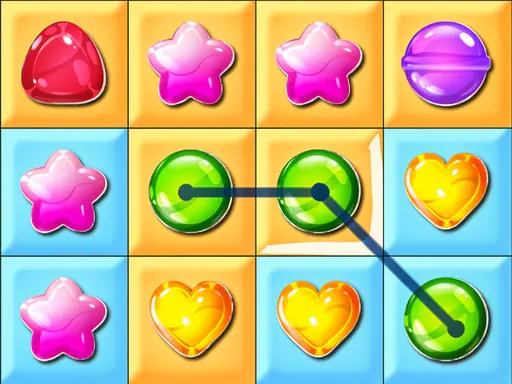 Candy Chain Master
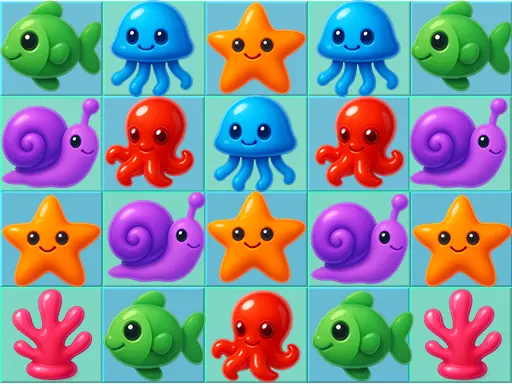 Underwater Blast
 Labubu Memory Challenge
 Spooky Chains
 Gravity Box
 Sand Route Puzzle
 Crazy Rocket Man
 Bus Jam
 Block Drop Escape Puzzle
 Toilet Paper Jam
 Brainrot A Difference Challenge
 Tiles Matching
 Chromatch
 Crypta
 Halloween Store Sort
 CropLink
 Candy Smush
 Squid Game X Sprunki Tetris
 Sudoku for bro
 Match The Figures
 Sugar Smash
 Ship Match Color
 LinksChallengPuzzle
How Memory Tables plays in the browser
Thirty on day one, twenty-six next week, and the number does not lie. We choose boards that load fast, cards that stay legible on small screens, and no effect that hides a card after it turns. Matching games suit an old office laptop because they barely need the network after loading, and a round can stop anywhere without losing score. It is also the easiest shelf to share: every wrong flip hands both players a new piece of information about the table.
All 45 games in this section run inside the tab: no install, no account, no download. Tap a title and the game opens on this same page.
- One tab, one game. Close the tab and the session is over.
- Finger controls or keyboard, depending on the title.
- Scores stay in this browser, so there is no account to maintain.
Three titles to open first
Picked from the 45 titles in this section.
- Match Dot Puzzle GameMatch Dot Puzzle Game is a browser Memory Tables game you can…
- Candy Chain MasterOpen Candy Chain Master and you are already playing — no login…
- Underwater BlastUnderwater Blast is one of the easier Memory Tables games to get…
An older phone is enough
No download means no storage taken. Open the link, play, close it: the phone goes back to how it was, and the battery is not drained by a background process.
Four steps to remember cards
Card memory is not about remembering everything, but about remembering played cards by group.
- Remember groups, not cardsTrack four suits instead of individual cards.
- Count high cardsCount only cards from ten upward; low cards matter less.
- Repeat what leftAfter each round, repeat once in your head what has gone.
- Ignore middle cardsDo not try to hold middle cards; it makes you forget the high ones.
- Track played cardsMark them by repeating what left after each round.
- Track dealsThe deal count tells you how many cards remain unseen.
- Track played cardsMark them by repeating what left after each round.
- Track dealsThe deal count tells you how many cards remain unseen.
- Track played cardsMark them by repeating what left after each round.
- Track dealsThe deal count tells you how many cards remain unseen.
In Memory Tables, players who count high cards recall about seventy percent, against forty percent when trying to hold everything.
Memory systems and what each one actually holds
Card memory in Memory Tables is not one skill. Each system below stores a different amount of information and costs a different amount of setup time.
| System | Holds | Setup | Best for |
|---|---|---|---|
| Position tracking | Three to five known cards | None | Watching discards in a fast round |
| Pair chunking | Four to six pairs | One round of practice | Games where matching pairs matter |
| Suit grouping | Nine cards of one suit | Two minutes | Counting how many of a suit remain |
| Peg list | Ten fixed positions | One evening | Remembering a full hand across rounds |
| Story chain | Eight to twelve cards | Thirty seconds per chain | Recalling a sequence in order |
| Counting system | Every card played | A week of practice | Long rounds where totals decide the result |
| Suit counting | Thirteen cards of one suit | Three minutes | Knowing whether a suit is exhausted |
| Pair grid | Nine pairs on a grid | Five minutes | Matching games with a fixed layout |
Start with position tracking. It costs nothing, and it is enough to win most short rounds.
Five habits that break a memory run
Memory fails in predictable places. Each item below is a habit that costs a card you had already memorised.
- Naming the card instead of its position The name is useless when you need to find the card again. Position survives longer, so say 'third from the left' rather than 'the seven'.
- Trying to hold the whole hand A hand of five is four too many for most players. Hold two positions and treat the rest as unknown.
- Rechecking a card you already know Every recheck overwrites a position you had. Trust the first look and spend the second on a new card.
- Counting during the deal Counting while cards are still moving splits attention at the exact moment memory is cheapest to form.
- Memorising across a break A two-minute pause clears most short-term card positions. Restart the count rather than trusting the old one in Memory Tables.
- Stopping after a miss One miss is noise, two in a row means the system is wrong for you. Change the system rather than practising harder.
- Testing recall before trusting it Cover the cards and name three positions. If you cannot, the memory never formed and the round is already lost.
- Using the same cue every time The same phrase for the same position builds a habit. Changing the wording each round resets the work in Memory Tables.
- Rehearsing three positions before the round Three positions rehearsed once are worth more than ten rehearsed badly. The rehearsal is the skill, not the recall.
- Naming the cue, not the card A cue like 'left corner' is repeatable; a card name is not. Cues survive into the next round in Memory Tables.
- Accepting one forgotten card Trying to recover a forgotten card costs the next two. Let it go and keep the positions you still hold.
Two remembered positions beat five half-remembered ones, in memory games and in card games alike.
Questions players actually ask
Why do the cards flip back before I can look?
Because the reveal time is fixed and short - usually under a second. You are not meant to memorise the card you just turned; you are meant to memorise the pairs you failed on. Turn two cards, note their positions, and let them flip back without frustration.
What is the fastest way to memorise a board?
Row by row, naming positions out loud or silently. The brain holds spatial sequences far better than it holds random images. Players who scan randomly need twice as many turns as players who sweep in a fixed order.
Should I start in the corners or the middle?
Corners first. Corner positions are the easiest to relocate after the cards flip, and a pair found in a corner stays findable. The middle of a large board is where most wrong guesses happen, because two adjacent positions look identical.
Is it better to guess or to wait?
Guess on the first pass, wait on the second. The first pass has nothing to lose; the second pass has information to protect. Once you know six or more cards, every wrong guess destroys information you paid for.
Why does the board get harder after a few pairs?
Because some modes add cards or shuffle when pairs are cleared. That is not a bug. Watch whether cleared slots stay empty: if they refill, the board is endless and your goal is score, not completion.
Does a bigger grid mean more pairs?
Not always. Grid size and pair count are set separately by the designer. A 6x6 board with 12 pairs has more empty space than a 4x4 with 8 pairs. Read the pair counter, not the grid.
Why do I remember some cards and not others?
Because you encoded the ones you named. Cards you looked at silently leave almost no trace. Say the position and the symbol together - front-left, red - and recall roughly doubles.
How many turns should a small board take?
Two turns for every pair is perfect, three is normal, four is where you are guessing. If you average four or more, slow down rather than restarting; speed is not the problem, encoding is.
Can I use paper?
Yes, and it feels like cheating until you try it. A simple grid with the known symbols turns a memory test into a logic test. If the game is meant as training, paper defeats the purpose; if it is meant as a puzzle, paper is legitimate.
Why does the timer feel unfair in memory games?
Because the clock measures turns, not thinking. Most memory boards reward accuracy far more than speed, and rushing adds wrong guesses that cost more time than they save. Ignore the clock until your accuracy is stable.
Player notes
I stopped looking at cards and started naming positions. Turns per pair dropped from four to three.
Player note, memory-game regular
Corners first. A pair found in a corner stays findable; the middle is where I lose track.
Player note, plays during lunch
Paper grid feels like cheating until you try it. It turns memory into logic, and my kid prefers it.
Player note, plays with a child
Quoted and condensed from public player discussions; names shortened.
Common questions
- Do I need an account to play?
- No. All 45 games in this section play without registration: no email, no password, no verification step.
- How long does one session take?
- Most titles finish in three to ten minutes, which fits a break without leaving anything half-done.
- Is my score saved?
- Your best score stays in this browser as long as site data is not cleared. No account also means no sync across devices.
Further reading
- The first ten seconds of a card round decide most of it
- Two people, one keyboard: rules that prevent the argument
- Why a paper score sheet still beats every app